AEO vs SEO: The Complete Guide to AI Search


1. The Shifting Search Landscape: From Clicks to Answers
For years, SEO optimisation ran on a pretty simple deal: you publish helpful content, Google crawls it, and—if you’ve done a decent job—you earn clicks. That old “ten blue links” model shaped how every business built its website.
But that world is disappearing fast.
With AI Overviews, Gemini, ChatGPT Search, and Perplexity, search has shifted from “find websites” to “give me the answer now.” Instead of sending people to your site, AI systems summarise the web and deliver the answer directly on the results page. It’s a zero‑click environment, and the numbers back it up—when an AI summary appears, organic clicks drop by roughly a third.
This is the new reality:
If your content isn’t structured for AI to quote, summarise, or cite, your brand simply doesn’t show up.
That’s the line between traditional SEO and modern AEO.
2. What SEO Actually Does (The Old Model)
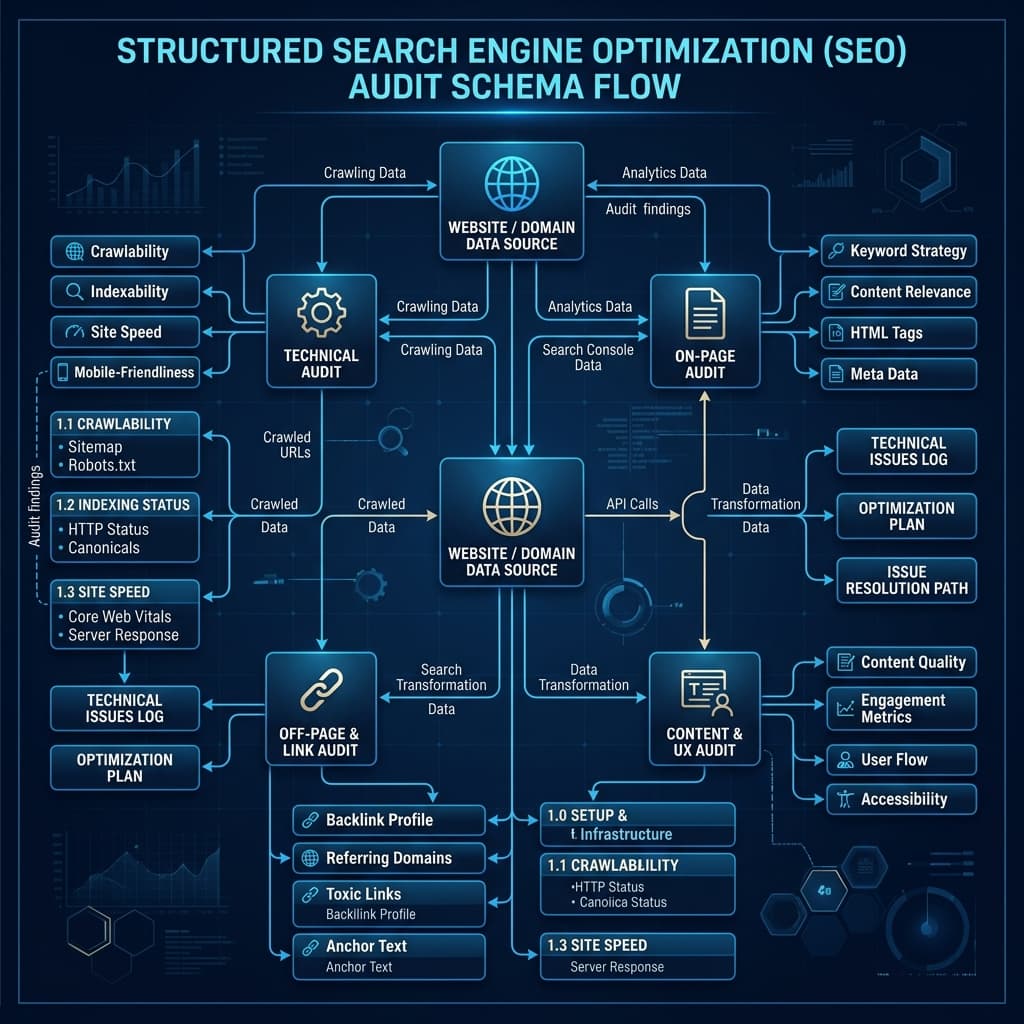
SEO is built on lexical retrieval—a fancy way of saying “keyword matching.” Search engines scan your pages for exact words, check your backlinks, and decide where your URL should rank.
It’s still important. Technical health, page speed, sitemaps, internal linking—none of that goes away.
But SEO’s job is clear:
Help your website rank so humans click through.
The problem?
AI search doesn’t care about ranking. It cares about meaning, context, and intent—not keywords.
3. What AEO Does (The New Model)
AEO—Answer Engine Optimisation—is built for AI systems that don’t “read” like humans or traditional crawlers. Instead of scanning for keywords, they use semantic retrieval and vector embeddings to understand concepts.
In simple terms:
AI doesn’t look for the exact words you wrote.
It looks for the idea you’re talking about.
AEO’s job is to:
Help AI engines extract your content, understand it, and cite it inside an answer.
This is where the shift from lexical retrieval → semantic retrieval → RAG (Retrieval‑Augmented Generation) becomes critical.
Semantic Glossary
Information Architecture
The structural design connecting entities for AI comprehension.
Semantic Lattice Maps
Visual frameworks linking topics semantically, not lexically.
Intent Families
Intent families are clusters of user goals that share the same underlying purpose.
Subject–Object Predict
AI inference connecting brand → product → outcome.
4. Lexical vs Semantic Retrieval (Plain English Version)
Lexical Retrieval (SEO)
- Works like Ctrl+F on a giant library.
- If someone searches “best lunchbox for kids,” Google looks for pages that literally contain those words.
- If your page says “children’s bento containers,” you might miss out.
Semantic Retrieval (AEO)
- Works like a brain, not a dictionary.
- AI converts your content into mathematical coordinates (vector embeddings).
- It understands that “kids lunchbox,” “school lunch container,” and “bento box” are related ideas.
- It retrieves the closest meaning, not the closest match.
RAG (Retrieval‑Augmented Generation)
This is the layer powering AI Overviews and ChatGPT Search.
It pulls relevant passages from multiple sources, blends them, and generates a single answer.
If your content isn’t structured into clean, atomic chunks, the AI simply won’t pick it up.
5. SEO vs AEO: The Real Differences
| Area | SEO | AEO |
|---|---|---|
| How engines read your content | Keywords | Meaning + intent |
| Retrieval model | Lexical (BM25, TF‑IDF) | Semantic (vector embeddings) |
| Optimisation unit | Whole pages | Atomic passages (90–120 tokens) |
| Goal | Rank URLs | Earn citations inside AI answers |
| Primary audience | Humans + crawlers | AI agents + conversational users |
| Best format | Long‑form content | Short, structured answer blocks |
6. Why the Funnel Has Collapsed
Old SEO funnel:
- TOF → MOF → BOF
- 15–30 days
- Multiple clicks
- Multiple pages
AI search funnel:
- One question
- One answer
- One shortlist
- One recommendation
- 5 minutes
If your content isn’t pre‑structured for AI to pull into that answer, you’re invisible.
This is why AEO matters.
7. How to Optimise for AEO (AEObility Playbook)
1. Write Atomic Answer Blocks
Short, direct answers under each heading.
40–60 words.
90–120 tokens.
Answer first retrieval.
No walls of text.
2. Use Machine‑Friendly Formatting
AI engines love:
- lists
- tables
- FAQs
- comparison matrices
- step‑by‑step breakdowns
These reduce the “cost of evaluation” for AI systems.
3. Add Strong Schema Markup
JSON‑LD is your instruction manual for AI search.
Use:
- FAQPage
- Product
- Organisation
- Author
- HowTo (when relevant)
4. Build Clear Internal Linking
Link to your core services and knowledge nodes:
This reinforces your entity graph and reduces hallucinations.
8. The Bottom Line
SEO still matters.
But SEO alone won’t get you into AI answers.
AEO is how you make your content discoverable, extractable, and quotable by modern AI systems.
If you want your brand to show up in AI Overviews, Gemini, ChatGPT Search, and Perplexity, you need to structure your content for semantic retrieval and RAG, not just keywords.
This is the new search landscape.
And this guide is your starting point.
Frequently Asked Questions
What is AEO?+
AI‑driven optimisation focusing on semantic retrieval and contextual answers.
How does AEO differ from SEO?+
SEO targets keywords; AEO targets meaning and entity relationships.
Why is AEO becoming more important?+
AI search doesn’t pull whole pages. It pulls passages, concepts and small chunks of meaning.
AEO is built for this world.
SEO helps you get crawled.
AEO helps you get answered.
Do I need to stop doing SEO?+
No. You still need SEO for structure, crawling and traditional Google results.
AEO sits on top of that and helps you show up in AI answers and zero‑click results.
The best approach is both.
SEO builds the house.
AEO makes the rooms easy for AI to find.